Theo Werner · 2 October 2026
Tracking Seasonal Sediment Shifts and Their Effects on Benthic Communities in Protected Estuarine Zones
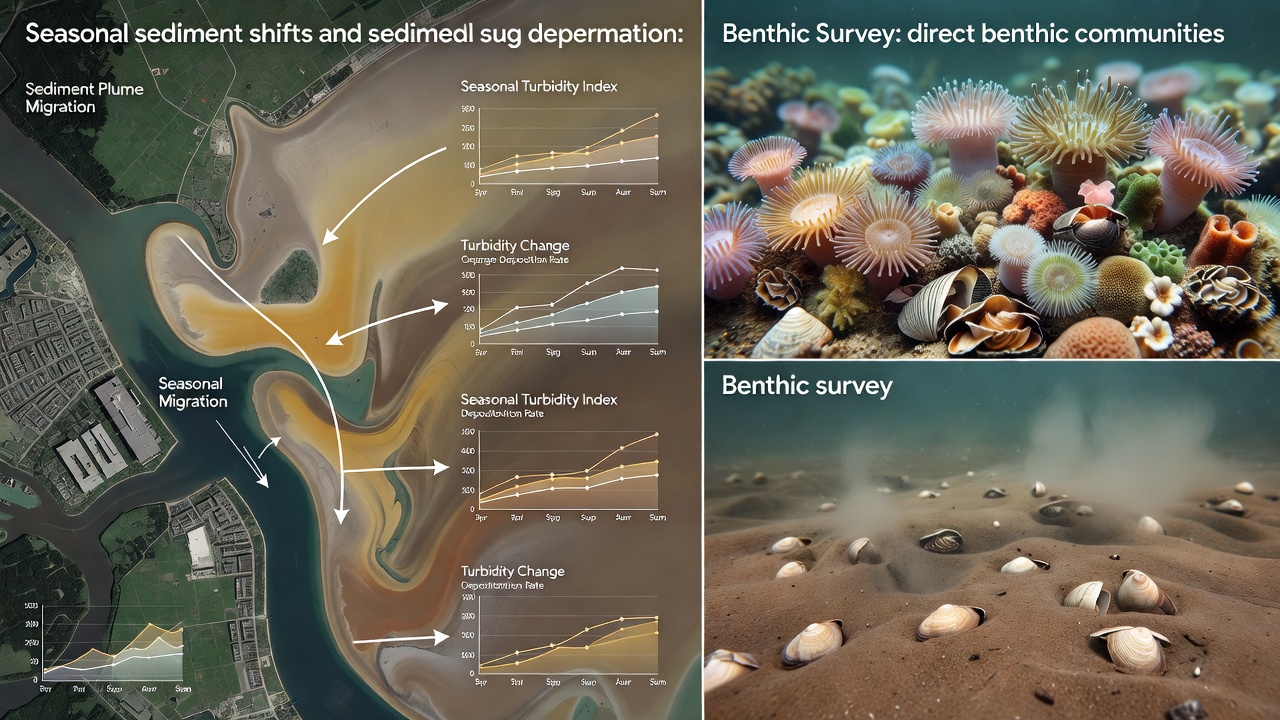
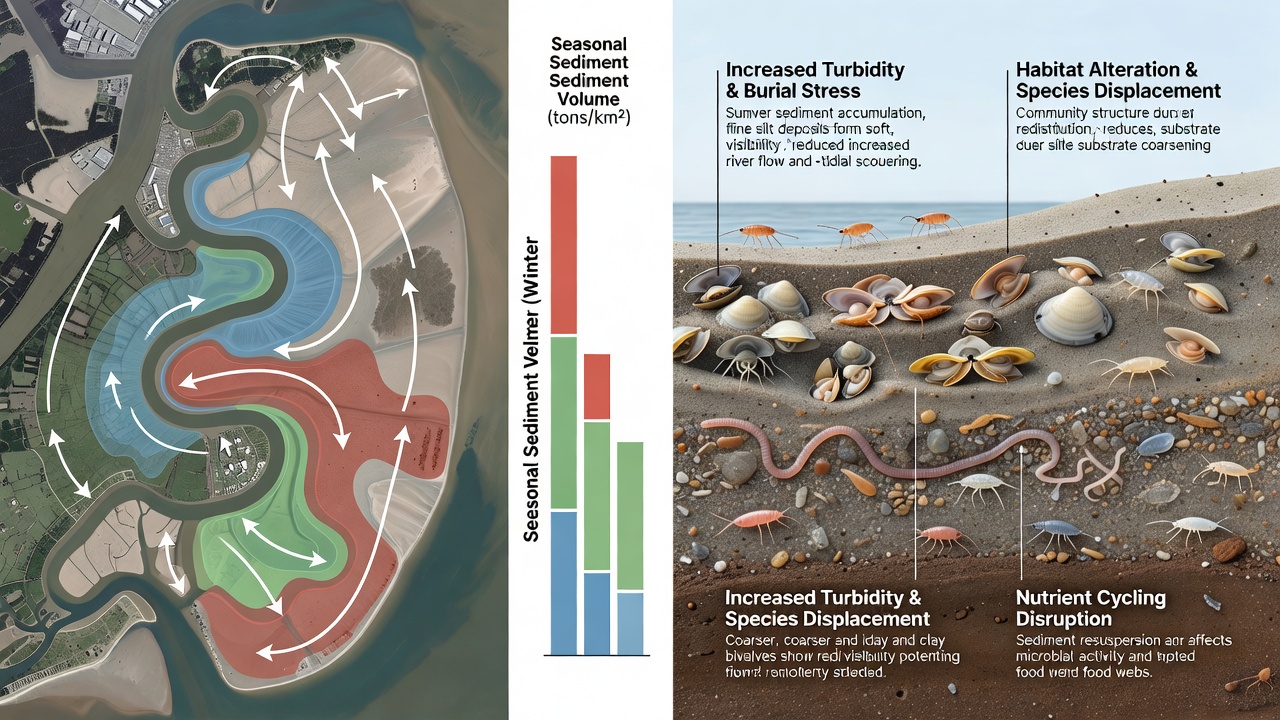
Protected estuarine zones experience regular cycles of sediment movement driven by river discharge, tidal currents, and seasonal storms, and researchers track these shifts through repeated sampling and remote sensing to understand their reach. Data from multiple monitoring programs show that sediment loads often peak during spring runoff and again in autumn when winds stir shallow bottoms, while winter months bring more stable deposition in many temperate systems. Observers note that these patterns alter grain size distribution across mudflats and channels, which in turn changes habitat suitability for organisms living within or on the sediment surface.
Methods Used to Monitor Sediment Movement
Teams deploy sediment traps, conduct benthic coring, and apply acoustic Doppler current profilers to record transport rates throughout the year. Satellite imagery and drone surveys supplement field measurements by mapping turbidity plumes and bathymetric changes over large areas. One study coordinated across several estuaries revealed that fine silt fractions increase by 25 to 40 percent between July and October in systems with moderate watershed input, whereas coarser sands dominate after major flood events. Researchers combine these datasets with water-quality sensors to link physical transport directly to biological responses recorded at fixed stations.
Direct Effects on Benthic Organisms
Benthic communities respond quickly when sediment covers feeding structures or reduces oxygen penetration. Polychaete worms and amphipods often burrow deeper or shift horizontally to avoid newly deposited layers, while filter-feeding bivalves experience reduced clearance rates when suspended particles rise. Evidence from long-term surveys indicates that species richness declines temporarily after heavy deposition events, yet recovery begins once calmer conditions allow recolonization from adjacent areas. In protected zones where fishing pressure remains low, mobile species such as certain shrimp and crabs move in response to altered sediment stability, redistributing biomass across the estuary floor.
Seasonal Patterns Observed Across Regions
Comparative work in North American and European estuaries shows that spring snowmelt produces the largest single pulse of fine material in many northern systems, whereas southern estuaries see more consistent input tied to rainfall throughout the wet season. Australian monitoring programs report that mangrove-fringed zones trap organic-rich sediment during summer floods, creating localized patches that support higher densities of deposit feeders. Canadian researchers documented similar seasonal layering in fjord-like estuaries, where winter ice cover limits resuspension until spring thaw. These geographic differences highlight how local hydrology and vegetation shape the timing and composition of sediment arriving at the benthos.
Role of Protected Status in Community Resilience
Estuaries designated as reserves or sanctuaries often maintain higher structural complexity in their benthic assemblages because physical disturbance from human activity stays limited. Monitoring data indicate that areas closed to bottom trawling retain more three-dimensional microhabitats formed by tube-building worms and shell beds, which help stabilize sediment during high-flow periods. When seasonal shifts occur, these structures reduce erosion and provide refuges that speed recovery for neighboring populations. Government agencies such as those operating under NOAA estuarine programs and parallel efforts in Australia continue to compare protected and open sites to quantify these benefits.
Interactions With Water Quality and Nutrient Cycling
Sediment movement influences nutrient release and oxygen demand at the sediment-water interface. When organic-rich layers settle during calm periods, microbial respiration increases and can lower bottom-water oxygen, stressing sensitive taxa. Conversely, resuspension during storms redistributes nutrients into the water column, fueling phytoplankton blooms that later settle as additional food for deposit feeders. Studies coordinated by Environment and Climate Change Canada link these cycles to measurable changes in denitrification rates, showing that protected zones sometimes exhibit more stable nutrient processing across seasons because physical mixing remains the dominant driver rather than external inputs.
Future Monitoring Priorities
Continued integration of autonomous sensors and machine-learning analysis of imagery will allow finer resolution of short-term events that traditional quarterly sampling misses. Programs now emphasize real-time alerts when turbidity thresholds are exceeded, enabling rapid deployment of additional sampling gear before conditions change. International collaboration through networks such as the Australian Institute of Marine Science supports data sharing that reveals broader trends across hemispheres. These approaches help managers anticipate how projected changes in precipitation and sea level may alter the seasonal sediment regime and its consequences for benthic life.
Conclusion
Long-term records demonstrate that seasonal sediment shifts remain a primary structuring force in estuarine benthos, with protected zones providing reference conditions that clarify natural variability from human influences. Continued tracking through combined field, remote, and modeling techniques supplies the information needed to maintain these habitats as conditions evolve.